

WhatsApp
wahmitech logo wahmitech logo
  • AI
  • Get in touch

    shape shape
    ×

    Request a Call Back

    ×

    Start Your Digital Solution Consultation Today

    Leave your contact details and our experts will get in touch to discuss the right technology solutions for your business.


    Send your project details to info@wahmitech.ae , and our team will review your requirements and get in touch with you shortly.

    Ecommerce Websites, Apps & B2B Platforms · Dubai, UAE

    Ecommerce Development
    Company in UAE

    WahmiTech designs, builds and supports custom ecommerce websites, Shopify stores, B2B portals and shopping apps for UAE businesses. Every project is planned around local payment methods, Arabic and English shoppers, and the systems your team already runs, such as ERP, inventory and couriers.

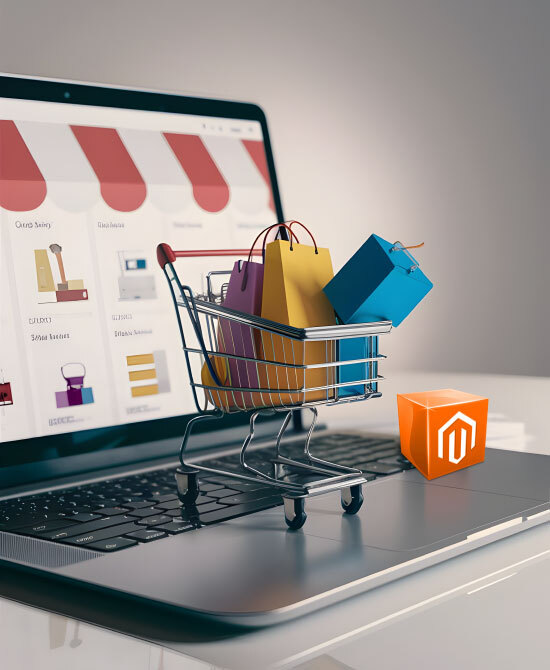
    Ecommerce store development for UAE businesses by WahmiTech

    An Ecommerce Development Company Built Around How the UAE Shops

    Selling online in the UAE comes with practical requirements that a generic template rarely covers: mobile-first browsing, Arabic and English storefronts, local payment methods such as cards, wallets, instalments and cash on delivery, courier integrations, and VAT-ready invoicing. WahmiTech is an ecommerce development company in the UAE that plans for these requirements in the first workshop, not as afterthoughts once the store is built.

    We build custom ecommerce websites, Shopify and WooCommerce stores, Magento and headless platforms, B2B ordering portals, multi-vendor marketplaces and ecommerce mobile apps. We connect them to payment gateways, ERP and accounting software, inventory and courier systems, and support them after launch. When a project also needs a wider digital foundation, our website design and development, mobile app development and custom software development teams work from the same brief.
    Ecommerce Development Services for UAE Businesses

    Custom Ecommerce Website Development

    Purpose-built online stores designed around your catalogue, pricing rules and checkout flow. We handle UX and UI design, front-end and back-end development, admin tooling and search-friendly page structure, so the store can grow without a rebuild.

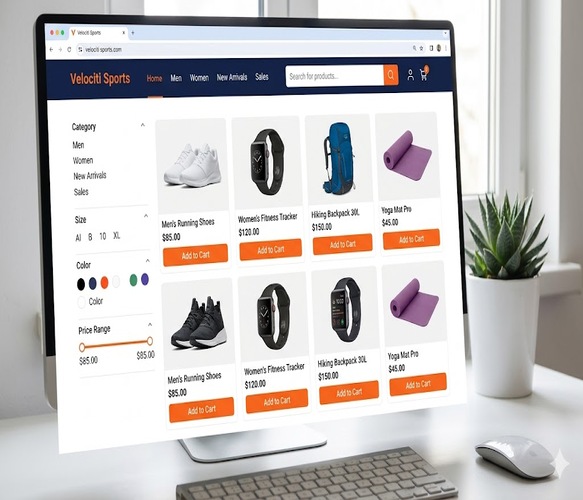
    Custom ecommerce website development

    Shopify Development

    As a Shopify development company, we set up and customise Shopify stores: custom themes, app selection and integration, checkout adjustments, Arabic-ready layouts and product data migration. A strong fit when speed to launch and low maintenance matter most.

    Shopify store development

    WooCommerce & Magento Development

    WooCommerce for content-led stores that want control of hosting and code; Magento (Adobe Commerce) for large catalogues, multiple storefronts and complex pricing. We build custom extensions, themes and integrations on both.

    WooCommerce and Magento development

    B2B Ecommerce Development

    Ordering portals for distributors, wholesalers and manufacturers: customer-specific price lists, bulk and repeat orders, quotes, credit terms and ERP-synced stock and invoices.

    B2B ecommerce portal development

    Multi-Vendor Marketplace Development

    Marketplaces with vendor onboarding and dashboards, product approval, commission rules, split payments and order handling, built to scale as vendors and listings grow.

    Multi-vendor marketplace development

    Ecommerce Mobile App Development

    Android and iOS shopping apps that share catalogue, customers and orders with your website, with push notifications, saved payment methods and order tracking.

    Ecommerce mobile app development

    Payment, ERP & API Integration

    Payment gateways, buy-now-pay-later, couriers, ERP, CRM, accounting and marketplace APIs connected so orders, stock and customer data move between systems without manual re-entry.

    Payment gateway and ERP integration for ecommerce

    Migration, Maintenance & Support

    Move an existing store to a new platform while keeping products, customers and search visibility intact, then keep it secure and fast with updates, monitoring, backups and technical support.

    Ecommerce migration and maintenance support
    Platform Strategy

    Shopify, WooCommerce, Magento or Custom: Which Ecommerce Platform Fits Your Business?

    The platform decision shapes your launch time, running costs and how far the store can stretch later. We recommend on evidence: catalogue size, order volume, B2B pricing needs, integrations, and how much of the technology your team wants to own. Our Shopify vs WooCommerce guide for Dubai businesses goes deeper on the two most common choices.

    Fastest to Launch Fully Custom & Unlimited Control
    01 · Rapid Launch

    Shopify Development

    A hosted platform where Shopify manages servers, security patching and checkout infrastructure. Our Shopify developers build custom themes, integrate apps and tailor the storefront for retail, fashion and D2C brands. It suits businesses that want to launch quickly and keep maintenance low.

    Best for: Startups & fast-scaling D2C brands
    02 · Flexible & Open-Source

    WooCommerce Development

    Built on WordPress, WooCommerce suits content-led stores and teams that want ownership of hosting and code. A large plugin ecosystem covers most needs, and custom development fills the gaps, keeping build cost manageable for growing SMEs.

    Best for: Content-driven SMEs & growing catalogues
    03 · Enterprise-Grade

    Magento & Adobe Commerce

    Designed for large catalogues, multiple storefronts and currencies, and complex pricing rules. Adobe Commerce adds native B2B features such as customer groups and shared catalogues, which is why it is common among established retailers and wholesalers that need deep integrations.

    Best for: Enterprises & high-SKU B2B/B2C operations
    04 · Fully Bespoke

    Custom & Headless Ecommerce

    Built with Laravel, Node.js and React.js on an API-first, headless architecture. Custom development removes platform limits for businesses with unique workflows, complex B2B logic, marketplace models or omnichannel requirements that packaged platforms cannot fully support.

    Best for: Complex, high-growth & omnichannel businesses
    Attribute Shopify WooCommerce Magento Custom Build
    Hosting Model Fully managed Self-hosted Self-hosted / Cloud Self-hosted / Cloud
    Customization Depth Moderate High Very High Unlimited
    Scalability Ceiling Mid-High Mid High Highest
    B2B / Multi-Pricing Logic Via apps Via plugins Native (Adobe Commerce) Fully bespoke
    Relative Build Effort Lower Moderate Higher Highest
    Ongoing Maintenance Low Moderate Moderate-High Dedicated support
    Ideal Business Stage Startup / Growth SME Enterprise Enterprise / Custom

    There is no universally best ecommerce platform. The right decision depends on your catalogue, order volume, integration needs and growth plans, so we review your requirements before recommending Shopify, WooCommerce, Magento or a custom build. Timelines and costs vary with scope, complexity and integrations, and are estimated individually for each project. Our ecommerce website development cost guide explains the main cost drivers.

    Ecommerce Requirements That Are Specific to the UAE

    Local Payments
    & Checkout

    Cards through gateways such as Telr, PayTabs, Network International, Checkout.com or Stripe; Apple Pay; buy-now-pay-later with Tabby or Tamara; and cash on delivery where your customers expect it. We help you compare gateways on fees, settlement terms and approval requirements, then build a checkout with as few steps and form fields as possible.

    Arabic, Multi-Currency
    & GCC Reach

    Arabic and English storefronts with proper right-to-left layouts, AED pricing with optional multi-currency, and a structure that makes it easier to extend into other GCC markets later, including market-specific shipping rules and content.

    Delivery, COD
    & VAT

    Courier and last-mile integrations for rates, labels and tracking, cash-on-delivery reconciliation, and VAT-ready pricing and tax invoices, so your operations and accounting teams are not correcting orders by hand.

    B2B Ecommerce Development for Distributors, Wholesalers and Manufacturers

    B2B buyers reorder the same items, negotiate prices, work on credit and expect their account details to be ready when they log in. A B2B ecommerce platform has to model those relationships, not just display a catalogue. We build B2B portals and storefronts on Magento, Shopify or a custom stack, depending on complexity, connected to the ERP that holds your stock, prices and invoices.

    Customer-Specific Pricing

    Price lists, tiered discounts and contract pricing by customer or customer group, applied automatically once the buyer logs in.

    Bulk & Repeat Ordering

    Quick-order forms, SKU or spreadsheet upload, reorder from past orders, and rules for minimum quantities and pack sizes.

    Quotes & Approval Workflows

    Request-for-quote flows, multi-user company accounts with buyer roles, and approval rules for larger purchases.

    Credit Terms & Payments

    Credit limits, payment terms, invoices and statement views alongside card and bank-transfer payment options.

    ERP, CRM & Inventory Sync

    Two-way sync of stock, prices, orders and customers with your ERP, accounting or CRM, so the portal reflects what your warehouse actually holds.

    Dealer & Distributor Portals

    Separate catalogues or storefronts for dealers and distributors, with regional pricing, territory rules and full order history.

    Ecommerce website and mobile app development by WahmiTech

    Ecommerce Mobile App Development: When an App Adds Value

    A mobile app is worth building when customers buy repeatedly and benefit from push notifications, saved payment details and order tracking, or when you need device features a browser cannot offer. For many stores, a fast, mobile-first website converts just as well at a lower cost. We help you make that call before you commit budget to either.

    As an ecommerce app development company, we build Android and iOS shopping apps that share catalogue, customers, promotions and orders with your website and back office, so stock and prices stay consistent across channels. If you need an app, our mobile app development team delivers it. If a website is the better first step, we structure the store so an app can be added later without rebuilding the back end.

    What Every WahmiTech Ecommerce Build Includes

    Whatever the platform, an online store has to do the fundamentals well. These are the capabilities we scope into each project, adjusted to your catalogue, customers and sales channels.

    • Catalogue and product management: variants, bundles, bulk import and category structures that scale with your range.
    • Search and filtering: faceted filters, typo-tolerant search and merchandising rules so shoppers find products quickly.
    • Cart and checkout: guest checkout, address validation, saved details and a short, mobile-friendly path to payment.
    • Customer accounts: order history, wishlists, saved addresses, segmentation and transactional notifications.
    • Promotions and loyalty: coupons, tiered discounts, bundles and loyalty points.
    • Order and inventory management: real-time stock, order statuses, returns and multi-location availability.
    • Analytics and reporting: sales, funnel and product reporting, with GA4 and conversion tracking configured at launch.
    • SEO-friendly architecture: clean URLs, crawlable category and product templates, structured data, XML sitemaps and canonical handling from day one.
    • Performance and scalability: image optimisation, caching, CDN-ready hosting and Core Web Vitals checks, sized for campaign and seasonal traffic spikes.
    • Security: SSL, PCI DSS-compliant gateways that keep card data off your servers, role-based admin access, backups and regular updates.
    • Responsive UX: mobile-first design tested across devices and browsers, with Arabic right-to-left support where required.
    • AI-assisted features: chatbot and product-recommendation integrations where they solve a real customer or support problem.

    Our Ecommerce Development Process

    Developing an ecommerce website goes wrong most often at the start, when scope, integrations and success measures are not pinned down. We work in six stages, each with a clear deliverable, so you always know what has been agreed and what comes next.

    DISCOVERY & SCOPING

    We map your products, customers, sales channels, existing systems and targets, then agree scope, platform and integration list so estimates rest on real requirements.

    UX & UI DESIGN

    Mobile-first wireframes and designs for navigation, product pages, checkout and account areas, with Arabic and English versions planned from the start where needed.

    DEVELOPMENT

    The build on your chosen platform, whether Shopify, WooCommerce, Magento or a custom Laravel, Node.js or React.js stack, with progress reviews and a staging site for sign-off.

    INTEGRATIONS

    Payment gateways, couriers, ERP, CRM, accounting and marketplace connections built and tested against real order scenarios, including refunds, partial shipments and cash on delivery.

    TESTING, SECURITY & PERFORMANCE

    Checkout and payment testing, device and browser checks, security review, page-speed and search-readiness checks before anything goes live.

    LAUNCH & SUPPORT

    A controlled launch with redirects and monitoring, followed by maintenance, updates, backups, analytics reporting and further development as your store grows.

    Commerce Operations

    Order Management, Inventory & Courier Integration for UAE Ecommerce

    A store that converts is only half the job. What happens after checkout, from stock allocation and picking to courier handoff, tracking and returns, decides repeat purchases and operating cost. We integrate the storefront with your order management, inventory and fulfilment systems so stock stays accurate and orders move without manual re-keying.

    01

    Order Placed & Payment Confirmed

    Every order is validated against live inventory and payment status before entering the fulfilment queue, preventing overselling and orders that never got paid.

    02

    Real-Time Inventory Check

    Stock is checked across warehouses or store locations in real time, so customers only see and buy what is actually available.

    03

    Warehouse Pick, Pack & Routing

    Orders are routed to the right warehouse or location based on stock availability, order type and delivery zone.

    04

    Courier & Shipping Handoff

    Courier integrations, for example with Aramex or other regional carriers where their APIs allow it, automate rate calculation, label generation and handoff for delivery across the UAE and GCC.

    05

    Delivery Tracking & Notifications

    Customers receive automated status updates and tracking links, which reduces support enquiries and improves the post-purchase experience.

    06

    Returns, Exchanges & RMA Processing

    Structured return workflows update inventory and order records automatically, keeping stock counts accurate and return handling consistent.

    Core Capability

    Real-Time Inventory Synchronisation

    Inventory is synchronised across your website, mobile app, marketplace listings and physical stores, removing overselling, stock mismatches and manual reconciliation between sales channels.

    Multi-Location Stock Control

    Manage stock across several warehouses or stores, with location-specific availability and routing logic.

    Split & Partial Shipments

    Split orders across locations when one warehouse cannot fulfil everything, without disrupting the customer experience.

    Courier & Logistics Integration

    Connect shipping and courier providers for automated rate calculation, label generation and delivery tracking.

    Returns & RMA Workflows

    Return-authorisation flows that update inventory once a return is received and processed.

    Low-Stock Alerts & Reorder Signals

    Low-stock and reorder-point alerts help you act on fast-moving products before a stockout affects sales.

    Reliable fulfilment infrastructure reduces manual errors, improves delivery consistency and gives UAE businesses the visibility to grow order volume without growing overhead. We connect order management and inventory directly with your storefront, your ERP and your courier partners as one architecture, with scope, integrations and timeline defined around your own operational workflow.

    Ecommerce Development by Industry

    Each sector has its own catalogue logic, compliance needs and fulfilment pattern. These are the ones we most often plan for, and the requirements we design around from the first workshop.

    Retail & Consumer Brands

    Catalogue and inventory management across website, app and stores, with promotions, loyalty and multi-branch stock visibility.

    Fashion & Lifestyle

    Size and colour variants, size guides, wishlists, recommendations and return workflows for categories with high return rates.

    Healthcare & Pharmacy

    Product and prescription flows with the approvals, document checks and delivery rules regulated categories require. Obligations vary by product and licence, so we build the workflow around your compliance team's requirements.

    Food, Grocery & Delivery

    Live inventory, delivery slots, zone-based fees, order tracking and quick reordering for restaurants, grocers and delivery businesses.

    Wholesale & Distribution

    B2B ordering with customer pricing, bulk orders, quotes and ERP synchronisation for distributors and manufacturers.

    Marketplaces & Multi-Vendor

    Vendor onboarding, commission rules, split payments, product moderation and marketplace administration.

    WahmiTech ecommerce development team working with a UAE business

    Why Businesses Choose WahmiTech for Ecommerce Development

    We are platform-neutral. Because we build on Shopify, WooCommerce, Magento and custom stacks, we recommend what fits your business rather than what fits our toolkit, and we explain the trade-offs in plain language before you commit.

    We connect the store to the rest of the business. Ecommerce projects succeed or stall on integrations, and alongside web and mobile development, WahmiTech builds custom software and ERP systems, so orders, inventory and finance are designed as one system instead of bolted together afterwards.

    We scope before we quote. Estimates follow a written scope with the cost drivers explained, and support continues after launch. Tell us about your store or platform through our contact page and we will respond with recommendations and a scoped estimate.

    REVOLCOM · ECOMMERCE MANAGEMENT SOFTWARE

    Run Orders, Stock and Finance from One System with RevolCom

    RevolCom is ecommerce management software built for retailers, wholesalers and distributors across the UAE. It brings order management, inventory, procurement, finance and CRM into one console, replacing spreadsheets and disconnected tools, and it can sit behind a storefront we build or one you already run.

    Modules: Order Management  •  Inventory Control  •  Procurement  •  Finance & Accounting  •  CRM

    One System for Every Operation

    From order intake to final invoice, RevolCom gives you a single source of truth across sales, stock and finance.

    Order Management

    Automate quotation-to-invoice workflows, dealer pricing and real-time order tracking, whether you run a single store or a multi-branch wholesale operation.

    Inventory Control

    Multi-warehouse inventory, stock transfers and real-time quantities, with low-stock alerts to help prevent stockouts before they cost you a sale.

    Finance & Accounting

    Ledgers, tax reporting and payment tracking in the same system, so month-end does not start with reconciling separate tools.

    CRM & Customer Growth

    Centralised customer profiles, segmentation and automated campaigns that keep buyers coming back.

    Already Selling Online?

    Connect RevolCom to Your Existing Ecommerce Website

    RevolCom can connect to your current storefront, so you do not need to rebuild your store to get better control of orders and stock. It also pairs with our ERP services for a complete, UAE-built commerce stack.

    Ecommerce Development in the UAE: Frequently Asked Questions

    Frequently asked questions about ecommerce development in the UAE
    What does an ecommerce development company in the UAE do?
    An ecommerce development company plans, designs and builds online stores and the systems around them: the storefront, product and order management, payment and courier integrations, ERP and accounting connections, and often mobile apps and ongoing support. In the UAE that also means Arabic and English storefronts, local payment methods and VAT-ready invoicing.
    Cost depends on the platform, catalogue size, custom features, integrations, design complexity and whether you need Arabic and English versions. A theme-based Shopify store and a custom B2B platform with ERP integration are very different projects, so we give a scoped estimate after a requirements discussion rather than a one-size-fits-all price. Our ecommerce website development cost guide explains the main cost drivers.
    It depends on scope. A theme-based store on a hosted platform can go live within weeks, while a custom, B2B or multi-integration build usually takes several months once design, integration testing and product data loading are included. We confirm a schedule after scope and integrations are agreed.
    Shopify suits fast launches with low maintenance. WooCommerce suits content-led stores and teams that want control of hosting. Magento (Adobe Commerce) suits large catalogues and complex B2B pricing, and a custom or headless build suits unique workflows and marketplaces. We recommend based on your catalogue, integrations and growth plans. See our Shopify vs WooCommerce comparison for more detail.
    Yes. B2B builds include customer-specific pricing, bulk and repeat ordering, quotes, credit terms and buyer roles, connected to your ERP so stock, prices and invoices stay in sync. We also build B2C stores and multi-vendor marketplaces with vendor dashboards, commission rules and order management.
    Not always. A fast, mobile-first website is enough for many stores. An app adds most value for repeat customers who benefit from push notifications, saved payment details and order tracking. We build Android and iOS apps connected to the same catalogue and orders as your website, and we will tell you when a website alone is the better first step.
    We integrate card gateways used in the UAE, such as Telr, PayTabs, Network International, Checkout.com and Stripe, plus Apple Pay, buy-now-pay-later providers such as Tabby and Tamara, and cash on delivery. Availability depends on each provider's onboarding and eligibility rules, so we help you compare fees, settlement terms and approval requirements before you commit.
    Yes. We build bilingual Arabic and English storefronts with right-to-left layouts and AED pricing, with optional multi-currency and market-specific shipping rules if you plan to sell in other GCC countries.
    Yes. We connect stores to ERP, CRM and accounting platforms, including Zoho and Odoo, to sync orders, stock and customer data, and we build custom API integrations where a ready-made connector does not exist. This removes manual re-entry and keeps stock accurate across channels. You can also explore our ERP services.
    We can connect your store to regional marketplaces such as Noon and Amazon.ae, syncing inventory and orders where the marketplace's APIs allow it, so you manage one catalogue across several sales channels.
    Yes. We migrate stores between Shopify, WooCommerce, Magento and custom platforms, moving products, customers and orders while planning URL redirects, metadata and structured data so search visibility is protected during the switch.
    We build with search in mind: clean URLs, crawlable category and product pages, structured data, XML sitemaps, fast loading and mobile-first design. Rankings also depend on content, links and competition, so we treat SEO as a strong foundation rather than a guarantee of position.
    Maintenance covers security updates, performance monitoring, backups, bug fixes and technical support. We can also continue development of new features, integrations and campaign pages as your store grows.
    Yes. You can engage our ecommerce developers for a complete build or for defined work such as Shopify theme customisation, integrations, migrations or ongoing support. Tell us the scope and we will propose the right team and engagement model.
    Yes. We work with businesses across the UAE, including Dubai, Abu Dhabi and Sharjah, and manage projects through online and in-person meetings depending on your preference.

    Latest insights

    Stay Updated in the UAE Market

    Explore expert insights, emerging industry trends, and innovative ideas driving digital transformation and business growth across Dubai and the UAE.

    Read all articles
    Start your ecommerce development project with WahmiTech

    Ready to Build Your Ecommerce Store in the UAE?

    Tell WahmiTech what you sell, where you sell it and which systems you already use. We will come back with platform recommendations, an integration plan and a scoped estimate for your ecommerce website, B2B portal or shopping app.

    Get a Free Consultation

    Collaborate with innovators who bring ideas to life.

    Schedule your free consultation now!

    United Arab Emirates

    Wahmi Technologies L.L.C

    Sharjah Media City P.O. Box 515000, Sharjah, UAE

    info@wahmitech.ae

    Connect with our experts