



 Artificial Intelligence
 Augmented & Virtual Reality
 Internet of Things
 Custom Software Development
 ERP Development
 Mobile Application Development
 Web Application Development
 Web Designing
 E-Commerce


How IoT Is Transforming Business Operations in Dubai and the UAE
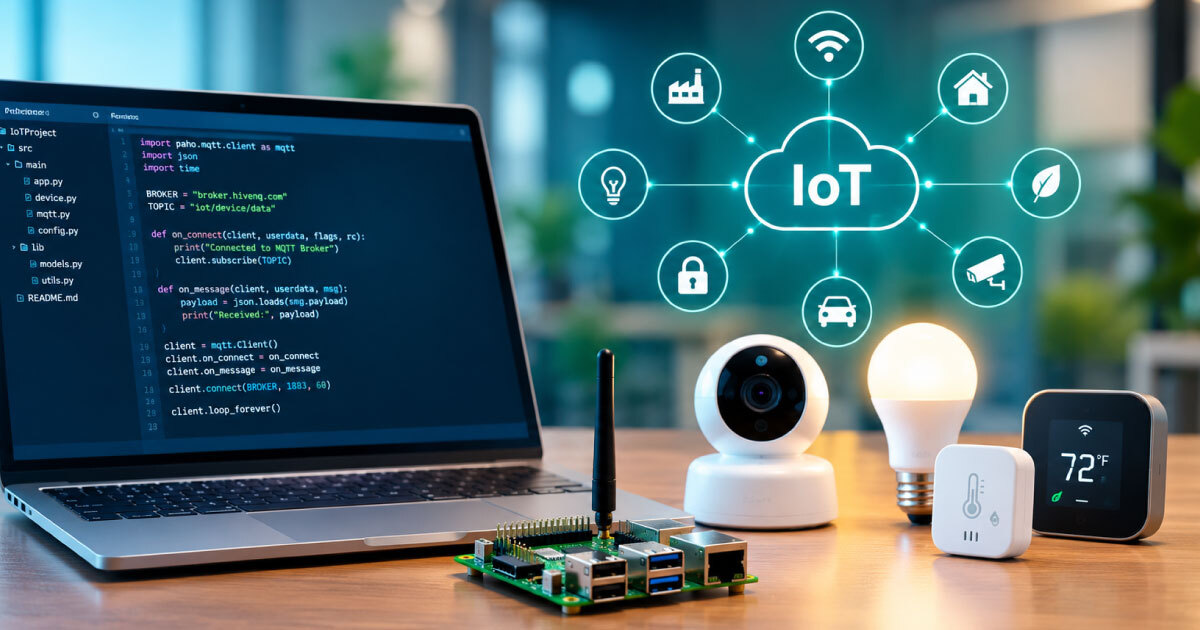
How IoT Is Transforming Business Operations in Dubai and the UAE
The Internet of Things (IoT) is changing how businesses collect information, monitor equipment, manage resources, and make operational decisions. By connecting physical devices to digital systems, organizations can gain better visibility into their operations and respond to changing conditions more efficiently.
From smart buildings and connected logistics to industrial monitoring and energy management, IoT technology supports a wide range of business applications. As organizations across Dubai and the UAE continue investing in digital transformation, understanding how IoT works and where it delivers practical value has become increasingly important.
This guide explains the fundamentals of IoT, its major business applications, the technologies involved, and the factors organizations should consider before implementing an IoT solution.
What Is the Internet of Things (IoT)?
The Internet of Things refers to a network of physical devices equipped with sensors, software, and connectivity that enables them to collect and exchange data. These devices can include industrial machines, temperature sensors, smart meters, vehicles, building equipment, and connected consumer products.
An IoT system typically includes four main components:
- Connected devices: Sensors and equipment that collect information from the physical environment.
- Connectivity: Communication technologies that transmit data between devices, gateways, and digital platforms.
- Data processing: Software that analyzes incoming information and identifies patterns, conditions, or events.
- Applications and dashboards: Interfaces that help users monitor devices, view reports, and take appropriate action.
For example, a warehouse can use temperature sensors to monitor storage conditions. When the temperature exceeds a defined threshold, the system can send an alert to the responsible team.
An IoT Development Company in Dubai may build the software, integrations, dashboards, and device communication systems needed to support such applications. The exact architecture depends on the business requirements, equipment, connectivity, and expected scale.
Why Are Businesses in the UAE Adopting IoT?
IoT helps organizations connect physical operations with digital decision-making. Instead of relying entirely on manual inspections and disconnected records, businesses can use sensor-generated data to understand conditions in near real time.
Improved Operational Visibility
Connected sensors can provide continuous information about equipment status, environmental conditions, inventory movement, and energy consumption. This helps teams identify operational issues without depending exclusively on periodic manual checks.
Better Resource Management
Smart monitoring systems can help organizations understand how electricity, water, fuel, and other resources are being used. Businesses can analyze this information to identify waste and improve resource planning.
Faster Response to Problems
IoT applications can generate alerts when predefined conditions occur, such as abnormal equipment vibration, unexpected temperature changes, or unauthorized access to monitored areas.
Data-Driven Decision-Making
Historical sensor data can reveal trends that are difficult to identify through isolated observations. Managers can use these insights to plan maintenance, assess performance, and make more informed operational decisions.
Organizations evaluating IoT Development Services UAE providers should first identify the operational challenges they want to address rather than adopting connected technology without a defined purpose.
Key Business Applications of IoT in Dubai and the UAE
1. Smart Buildings and Facility Management
Building operators can use IoT sensors to monitor temperature, occupancy, lighting, air quality, and equipment performance. Connected systems can support automated lighting controls, HVAC optimization, and maintenance alerts.
For example, occupancy sensors may help adjust lighting in underused areas, while equipment monitoring can notify maintenance teams when an air-conditioning unit operates outside its expected range.
Businesses exploring Smart IoT Solutions Dubai providers may consider these applications for offices, commercial properties, hotels, warehouses, and other facilities.
2. Manufacturing and Industrial Operations
Industrial environments contain machines and equipment that generate valuable operational data. IoT systems can monitor vibration, temperature, pressure, production activity, and other equipment conditions.
This information can help maintenance teams detect unusual behavior and investigate potential problems before they cause major disruption.
Industrial IoT Solutions Dubai businesses implement may include machine monitoring dashboards, production data collection, equipment alerts, and integration with manufacturing or enterprise systems.
The benefits depend on sensor quality, reliable data collection, appropriate alert thresholds, and the ability of teams to act on the information.
3. Logistics, Fleet Management, and Asset Tracking
Logistics companies can use connected devices to monitor vehicle locations, operating conditions, fuel usage, and asset movement. Temperature sensors may also help monitor sensitive goods during transportation.
For example, a fleet manager can receive an alert when a vehicle enters or leaves a designated area, while a connected temperature sensor can identify when a refrigerated shipment moves outside its permitted range.
These applications can improve operational visibility and support more informed logistics decisions. They may also require integration with fleet management software, mapping services, inventory systems, and business reporting tools.
4. Energy and Utility Monitoring
IoT-enabled meters and sensors can collect data about electricity, water, and other utility consumption. Dashboards can help facility managers compare usage across locations, identify unusual patterns, and evaluate the results of efficiency initiatives.
Smart monitoring is especially useful when an organization operates multiple facilities and needs consistent reporting across its properties.
However, identifying an unusual consumption pattern does not automatically explain its cause. Businesses may need additional analysis, equipment inspections, or operational changes to achieve measurable savings.
5. Healthcare and Environmental Monitoring
Connected devices can support environmental monitoring, equipment-status tracking, and selected healthcare workflows. Temperature and humidity sensors, for example, can help monitor storage environments for temperature-sensitive supplies.
Healthcare-related implementations require particular attention to privacy, access control, device reliability, and applicable regulatory requirements. IoT monitoring should complement established professional procedures and safety controls.
6. Retail and Warehouse Operations
Retailers and warehouse operators can use IoT devices to monitor storage conditions, equipment status, and the movement of selected assets. Connected sensors and identification technologies can improve visibility into certain inventory processes.
When connected to inventory management systems, IoT data can help organizations identify discrepancies, monitor environmental conditions, and streamline selected workflows.
The most suitable approach depends on the type of inventory, the required tracking accuracy, and the cost of deploying and maintaining the devices.
How IoT Software and Connected Devices Work Together
An IoT solution is more than a collection of connected sensors. It needs software that can receive data, manage devices, process events, and present useful information to users.
A typical implementation follows this process:
Step 1: Data collection
Sensors collect information such as temperature, movement, pressure, location, or equipment status.
Step 2: Data transmission
Devices send information through an appropriate communication method, such as Wi-Fi, cellular connectivity, Bluetooth, or a suitable low-power network.
Step 3: Data processing
An application, gateway, or cloud service processes the information and checks whether it meets defined rules or conditions.
Step 4: Monitoring and alerts
Dashboards display current conditions and historical trends. Notifications can alert the relevant team when a threshold is exceeded or an unexpected event occurs.
Step 5: Integration and action
The system may connect with enterprise applications, maintenance workflows, inventory software, or automated controls so that information leads to an appropriate business response.
An IoT Software Development Company helps design the software components that make this process useful, secure, and manageable. Device selection and network architecture are equally important to the success of the overall system.
What Is Involved in IoT Development Services?
IoT Development Services Dubai businesses consider can involve several technical and operational activities.
IoT Application Development
An IoT application provides the interface through which users monitor devices, review data, receive alerts, and manage selected operations. Depending on the project, it may be a web dashboard, mobile application, or specialized industrial interface.
An IoT Application Development Company Dubai businesses evaluate may also need to support different user roles, reporting requirements, and integration with existing applications.
IoT Platform Development
An IoT platform can provide device registration, data ingestion, device status monitoring, event processing, and application connectivity.
IoT Platform Development Services may involve designing a platform around specific business requirements or configuring existing technologies to support the intended solution. The choice depends on scalability, deployment preferences, security, and long-term maintenance needs.
Device Integration
IoT Device Integration Services connect sensors, gateways, controllers, and connected equipment with the software that processes their data.
Integration can be challenging when devices use different communication protocols, data formats, or vendor-specific interfaces. Compatibility should be assessed before implementation begins.
System Integration
IoT systems often need to exchange information with ERP, CRM, warehouse management, maintenance, or analytics applications.
An IoT System Integration Company UAE businesses engage may design these connections so that sensor information becomes available within existing business workflows instead of remaining isolated in a separate dashboard.
Automation and Monitoring
IoT automation can trigger defined actions based on sensor readings, schedules, device states, or other conditions. For example, a system might send a maintenance notification when a machine exceeds a configured vibration threshold.
IoT Monitoring Solutions UAE organizations implement can include alerts, historical reports, device-health information, and operational dashboards. Automated actions should include suitable safeguards, especially when they affect physical equipment or safety-critical processes.
IoT vs. Industrial IoT: What Is the Difference?
The Internet of Things covers a broad range of connected applications, including smart homes, buildings, consumer products, utilities, and business systems.
Industrial Internet of Things (IIoT) focuses on connected technologies used in industrial environments, such as factories, production facilities, warehouses, and energy operations.
IIoT implementations often have additional requirements involving equipment reliability, operational technology, legacy machinery, low-latency communication, and industrial safety.
For example, a smart office may use connected sensors to adjust lighting based on occupancy. An industrial facility may use vibration sensors to monitor rotating machinery and identify conditions that require maintenance.
Both applications use connected data, but the consequences of downtime, the integration requirements, and the operational risks can differ significantly.
Challenges to Consider Before Implementing IoT
Although IoT offers useful capabilities, businesses should assess several challenges before starting a project.
Device Compatibility
Sensors and equipment may use different communication protocols and data formats. Selecting compatible hardware and defining integration requirements early can reduce implementation difficulties.
Connectivity and Reliability
Some environments have limited or inconsistent network coverage. The system may need gateways, local data processing, buffering, or alternative connectivity methods to continue operating when the connection is interrupted.
Cybersecurity and Data Protection
Connected devices can introduce additional security risks if they are poorly configured or maintained. Businesses should consider device authentication, encryption, access permissions, software updates, network segmentation, and secure data storage.
Scalability and Maintenance
A system designed for a small pilot may need architectural changes when hundreds or thousands of devices are added. Organizations should plan for device provisioning, monitoring, updates, replacement, and lifecycle management.
Data Quality and Alert Accuracy
Incorrect sensor readings, poorly configured thresholds, and excessive notifications can reduce trust in an IoT system. Testing and calibration help ensure that the collected information is useful for operational decisions.
Integration with Existing Systems
Legacy equipment and business applications may not support straightforward integration. Additional gateways, APIs, data transformation, or middleware may be required.
Businesses considering Custom IoT Solutions UAE providers should evaluate these challenges alongside development scope, operating costs, and expected business outcomes.
How to Plan an IoT Project for Your Business
A practical IoT implementation begins with a clearly defined business problem.
1. Identify the use case: Determine whether the priority is equipment monitoring, energy management, asset tracking, environmental monitoring, or process automation.
2. Define measurable outcomes: Establish indicators such as equipment downtime, response time, energy consumption, monitoring coverage, or maintenance costs.
3. Select suitable devices: Assess sensor accuracy, operating conditions, connectivity, power requirements, durability, and compatibility.
4. Plan the software architecture: Define how data will be collected, processed, stored, visualized, and shared with other applications.
5. Establish security requirements: Specify access controls, device identity, encryption, updates, monitoring, and data retention.
6. Run a pilot: Test the solution in a limited environment before expanding it across multiple locations or operations.
7. Measure and improve: Compare the results against the original objectives and refine the system based on actual operational data.
IoT Consulting Services UAE businesses explore can help clarify technical options, integration requirements, deployment models, and implementation priorities before a larger investment is made.
The Future of IoT in the UAE
IoT is expected to remain an important component of digital transformation as organizations explore connected infrastructure, industrial monitoring, smart facilities, and data-driven operations.
The combination of IoT, artificial intelligence, edge computing, and cloud platforms can enable more advanced capabilities. For example, sensor data may help analytics systems identify unusual equipment behavior, while edge computing can process selected information closer to where it is generated.
These technologies are not automatically beneficial in every situation. Their value depends on data quality, suitable infrastructure, effective security, and a clear operational purpose.
An IoT Development Company in UAE businesses choose should therefore understand both the technical architecture and the real-world environment in which the solution will operate.
Conclusion
The Internet of Things enables businesses to connect physical equipment with digital applications, making it easier to monitor operations, understand resource usage, and respond to changing conditions.
From smart buildings and industrial equipment to logistics, utilities, and warehouse operations, IoT can support a wide range of business needs. Successful implementation requires more than connected hardware: it depends on reliable software, appropriate integration, security, maintenance, and measurable objectives.
For organizations in Dubai and across the UAE, starting with a focused use case and testing it through a practical pilot can help establish whether IoT delivers sufficient operational value before a wider rollout.
By understanding the technology, evaluating the challenges, and planning for long-term management, businesses can make better-informed decisions about integrating connected devices into their operations.