



 Artificial Intelligence
 Augmented & Virtual Reality
 Internet of Things
 Custom Software Development
 ERP Development
 Mobile Application Development
 Web Application Development
 Web Designing
 E-Commerce


ERP Development for Businesses in Dubai and the UAE: Benefits, Features, and Implementation
Introduction
Businesses across Dubai and the UAE are increasingly adopting digital solutions to manage daily operations, improve productivity, and make better business decisions. As companies expand, managing finance, inventory, sales, procurement, human resources, and customer information through separate systems can become complicated. This is where Enterprise Resource Planning (ERP) software becomes valuable.
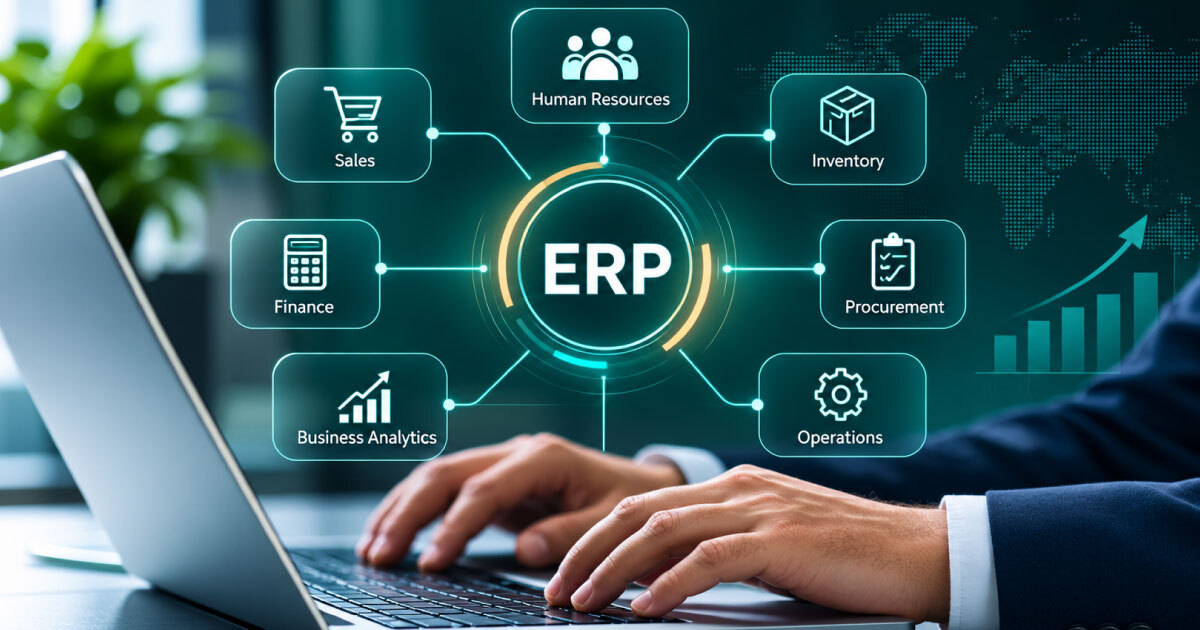
An ERP system brings different business functions together on a single platform. Instead of maintaining disconnected spreadsheets and applications, businesses can centralise information, automate routine processes, and gain a clearer view of their operations.
What Is ERP Software and How Does It Work?
Enterprise Resource Planning software is a business management solution that connects multiple departments through a shared system. It enables authorised employees to access relevant information, update records, and coordinate activities using a centralised database.
For example, when a sales order is created, an ERP system can help update inventory records, notify the finance team, and support delivery planning. This reduces the need to enter the same information into several applications.
An ERP platform may include finance and accounting, inventory management, sales, procurement, human resources, project management, and reporting modules. The appropriate combination depends on the company's requirements, industry, and operational complexity.
Why Do Businesses in Dubai and the UAE Need ERP Solutions?
Businesses in the UAE operate across industries such as retail, logistics, manufacturing, construction, professional services, healthcare, and distribution. Although each sector has different operational requirements, many face similar challenges when managing business information.
1. Managing Multiple Business Functions
When departments use separate tools, employees may struggle to obtain accurate and up-to-date information. ERP software connects essential business functions and helps teams work with consistent records.
2. Reducing Manual Work
Manual data entry, repeated approvals, spreadsheet updates, and routine reporting consume valuable time. ERP workflows can automate selected tasks, reduce repetitive work, and help employees focus on higher-value activities.
3. Improving Business Visibility
Managers need reliable information to evaluate expenses, stock availability, sales performance, and operational efficiency. A centralised ERP system can provide dashboards and reports that support more informed decisions.
4. Supporting Business Expansion
As organisations grow, their existing tools may no longer support additional employees, locations, warehouses, or transaction volumes. A properly planned ERP platform can help businesses scale their processes without relying on disconnected systems.
What Does an ERP Development Company Do?
An ERP Development Company in Dubai helps businesses plan, develop, customise, integrate, and maintain enterprise resource planning systems according to their operational needs.
Instead of forcing every organisation to follow the same workflow, an ERP development partner assesses how the business operates and identifies opportunities to improve processes through technology.
Typical services include business process analysis, ERP consulting, custom software development, module configuration, system integration, data migration, user access configuration, testing, deployment, employee training, and ongoing maintenance.
Businesses evaluating an ERP Development Company in UAE should consider technical expertise, industry understanding, integration capabilities, data security, and the provider's approach to long-term support.
Custom ERP Development vs. Ready-Made ERP Software
Choosing between ready-made ERP software and a custom-built platform depends on the organisation's size, processes, budget, and future requirements.
Ready-made ERP software may be suitable when standard features meet most business needs. It can reduce development requirements, although licensing, configuration, integration, and customisation may still be necessary.
Custom ERP Development Dubai businesses consider can be useful when their processes require specialised workflows, industry-specific modules, or integrations that standard software cannot adequately support.
Custom development generally requires detailed planning, development, testing, and ongoing maintenance. Businesses should compare the total cost of ownership and expected benefits before selecting an approach.
Important Features of Modern ERP Systems
Centralised Business Data
A shared database allows authorised departments to work with consistent information, reducing duplicate records and conflicting data.
Workflow Automation
Automated approvals, notifications, recurring tasks, and status updates can reduce delays in routine business processes.
Financial Management
Finance modules can support invoicing, expense tracking, budgeting, transaction records, and financial reporting. UAE businesses should assess the system's suitability for their accounting practices and applicable tax requirements.
Inventory and Supply Chain Management
Inventory features help track stock movements, warehouse balances, reorder requirements, and purchase orders. These capabilities are particularly useful for businesses handling large product volumes.
Dashboards and Reporting
Role-specific dashboards can help managers review key indicators, monitor operations, and identify issues that need attention.
Access Control and Security
Permissions, authentication, audit trails, backups, and security monitoring can help protect business information. The controls required depend on the sensitivity of the data and the organisation's security policies.
ERP Development Services in Dubai: What Is Included?
ERP Development Services Dubai businesses require may range from developing a complete enterprise platform to improving an existing system. Understanding the service scope helps organisations plan their investment and implementation timeline.
ERP Consulting and Requirement Analysis
ERP Consulting Services UAE providers may assess existing processes, departmental needs, reporting requirements, and integration dependencies before recommending a solution. This stage helps define the project scope and identify essential features.
Custom ERP Software Development
Custom ERP Software Development UAE projects involve building features, modules, and workflows around defined business requirements. Development may include finance, procurement, inventory, sales, human resources, or other operational functions.
ERP Application Development
ERP Application Development Dubai projects may include web-based interfaces, mobile access, employee portals, management dashboards, and department-specific applications, depending on user needs.
ERP Integration Services
ERP Integration Services Dubai help connect ERP software with other business tools, such as e-commerce platforms, CRM software, payment gateways, logistics applications, and reporting systems. Integration requirements should be defined carefully to avoid duplicate records and inconsistent data.
ERP Implementation Services
ERP Implementation Services UAE typically cover configuration, data migration, testing, deployment, user training, and post-launch support. A structured implementation process helps reduce disruption to daily business activities.
ERP Migration and Maintenance
ERP Migration Services UAE can help businesses move data from legacy applications or older ERP platforms. Data validation and testing are important to ensure records remain accurate.
ERP Maintenance Services Dubai may include bug fixes, security updates, performance monitoring, backups, and feature improvements after deployment.
Cloud ERP Development and Business Flexibility
Cloud-based ERP systems allow organisations to access business applications through an internet connection rather than managing all infrastructure on-site. Depending on the solution, the provider may manage hosting, updates, backups, and infrastructure maintenance.
Cloud ERP Development Dubai projects can be suitable for businesses that need access across multiple offices or locations. Before selecting a cloud ERP solution, businesses should evaluate data hosting requirements, access permissions, backup arrangements, availability, infrastructure costs, and integration capabilities.
Cloud deployment is not automatically the best choice for every organisation. On-premises and hybrid approaches may be appropriate where specific operational, technical, or regulatory requirements apply.
ERP Customisation and System Integration
Every business has its own approval structures, reporting needs, and operating procedures. ERP Customisation Services Dubai may involve creating additional fields, modifying approval workflows, configuring dashboards, introducing business-specific calculations, or developing specialised modules.
However, excessive customisation can increase implementation complexity and make future upgrades more difficult. Businesses should prioritise changes that deliver measurable operational value.
Integration is equally important. Connecting an ERP platform with an online store can help synchronise orders and inventory. Linking it with a CRM system may provide better visibility into customers, sales activities, and order status.
How ERP Automation Improves Business Efficiency
ERP Automation Solutions UAE businesses adopt can help reduce repetitive administrative work and improve process consistency.
- Automatically routing purchase requests for approval.
- Sending alerts when inventory falls below a defined level.
- Generating invoices from approved transactions.
- Notifying teams about delayed orders or pending tasks.
- Scheduling recurring reports.
- Updating records when connected systems exchange information.
Automation should be introduced after the underlying process is clearly defined. Businesses should also establish approval controls, exception handling, and monitoring to ensure automated activities remain accurate.
How to Choose an ERP Software Company in the UAE
Selecting an appropriate development partner is an important part of an ERP project. The provider should understand both the technical requirements and the business processes the system is expected to support.
When comparing an ERP Software Company in UAE, consider these factors:
- Business understanding: The provider should understand your operations, challenges, and goals.
- Technical capability: Evaluate experience with relevant architectures, databases, integrations, and security controls.
- Customisation approach: Ask how essential custom features are distinguished from functionality that can be configured.
- Data migration: Confirm how existing data will be mapped, transferred, and validated.
- Project transparency: Request a clear scope, deliverables, milestones, and testing process.
- Training and support: Establish who will train employees and manage ongoing maintenance.
- Scalability and ownership: Understand licensing, source-code ownership where applicable, hosting responsibilities, and future enhancement costs.
Businesses looking for an ERP Company Abu Dhabi or a provider elsewhere in the UAE should apply the same evaluation criteria rather than choosing solely based on location.
ERP Development Challenges Businesses Should Plan For
ERP projects can deliver significant benefits, but successful implementation requires planning and employee involvement. Common challenges include unclear requirements, changing project scope, inconsistent legacy data, integration difficulties, limited employee adoption, underestimated costs, and insufficient testing.
Businesses can reduce these risks by defining measurable objectives, involving department representatives, validating data early, conducting user acceptance testing, and providing appropriate training. A phased rollout may also help when replacing several existing systems or introducing multiple ERP modules.
What Is the Future of ERP Systems in the UAE?
ERP platforms are evolving as businesses adopt cloud infrastructure, advanced analytics, mobile applications, and AI-supported capabilities. Potential developments include predictive inventory planning, automated document processing, demand forecasting, anomaly detection, and conversational interfaces for accessing business information.
These capabilities can help organisations identify patterns and reduce manual analysis. Their effectiveness depends on data quality, appropriate system design, security, and human oversight.
When evaluating Enterprise Resource Planning Software UAE options, businesses should prioritise a flexible and maintainable system that meets real operational needs rather than adopting features simply because they are new.
Conclusion: Building the Right ERP Solution for Business Growth
ERP software helps businesses connect departments, improve information visibility, automate repetitive processes, and establish more consistent ways of working. The right solution depends on business objectives, operational complexity, existing applications, and plans for future growth.
Whether an organisation needs a ready-made platform, a customised ERP system, cloud deployment, or integration with existing applications, a clear implementation strategy is essential.
Choosing an experienced ERP development partner can help businesses plan, develop, deploy, and maintain a solution that delivers practical value over time. Before beginning a project, define the challenges you want to solve, identify the departments and workflows involved, and establish measurable success criteria.
To explore ERP software options for your business, learn more about our ERP software development services in Dubai and the UAE. A clear understanding of your requirements can help you select an ERP solution that supports your business operations and long-term growth.
Discover how the right ERP platform can help your organisation improve efficiency, connect business processes, and prepare for future expansion.