



 Artificial Intelligence
 Augmented & Virtual Reality
 Internet of Things
 Custom Software Development
 ERP Development
 Mobile Application Development
 Web Application Development
 Web Designing
 E-Commerce


How Custom Software Helps Businesses in Dubai and the UAE Improve Efficiency
Businesses across Dubai and the UAE increasingly depend on digital systems to manage daily operations, serve customers and make informed decisions. As companies grow, however, the software they initially used may no longer meet their changing requirements. Employees might need to transfer information between separate applications, teams may rely on spreadsheets to track progress, and managers may struggle to access accurate business data.
These challenges can affect productivity, increase administrative work and make it harder to scale operations. Custom software offers an approach to addressing these problems by creating digital solutions around a company's specific processes, objectives and workflows.
Understanding how custom software works, where it provides value and when it makes sense to invest in it can help businesses make better technology decisions.
What Is Custom Software Development?
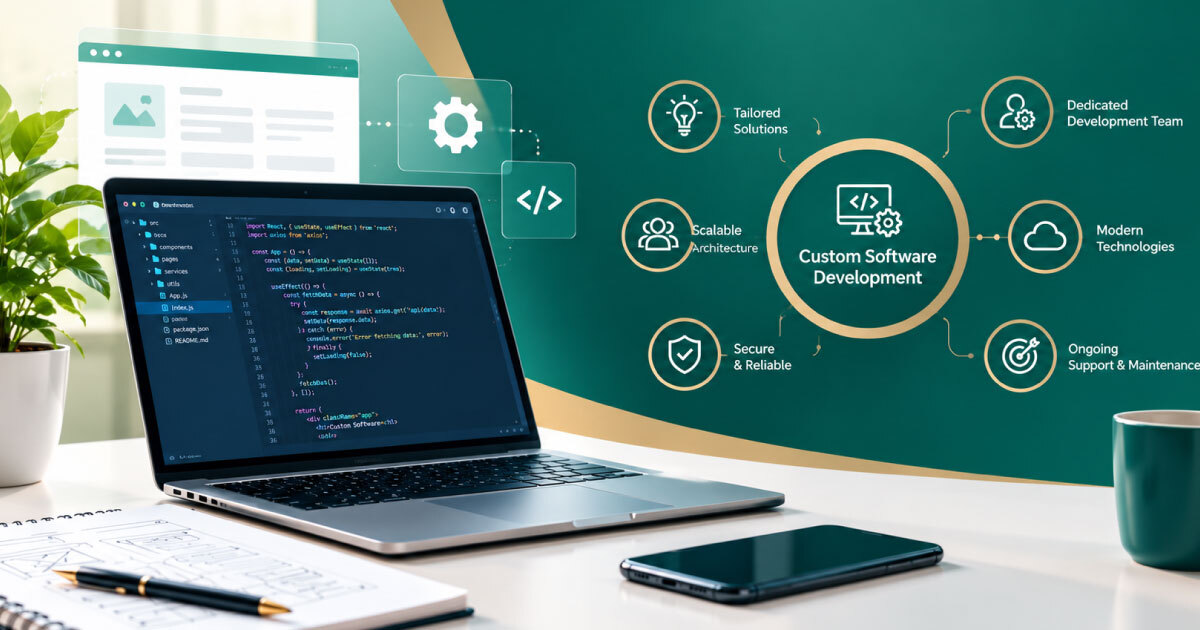
Custom software development is the process of designing, building, testing and maintaining software for specific business requirements. Unlike ready-made applications created for a broad audience, custom solutions can be developed around an organisation's existing workflows, operational challenges and long-term goals.
For example, a distribution company may need a system that connects inventory, procurement, orders and delivery operations. A professional services business may require project tracking, employee allocation, customer records and invoicing within a single application.
Rather than forcing employees to adapt to unrelated tools, custom software can bring relevant processes together in a system designed for how the business operates.
A custom software development company in Dubai may work with businesses to identify these requirements, plan the solution architecture and develop software that supports their operational needs.
Why Are Businesses in Dubai and the UAE Investing in Custom Software?
Companies in different industries have different processes, compliance requirements, customer expectations and growth plans. A software solution that works well for one organisation may not suit another.
Several common business challenges can make custom software worth considering.
1. Manual and Repetitive Tasks
Many businesses still depend on spreadsheets, emails and manual data entry for routine activities. Employees may spend hours preparing reports, updating records, checking information or following up on approvals.
Custom software can automate repetitive tasks such as:
- Assigning work based on predefined rules.
- Generating reports from existing business data.
- Sending notifications and reminders.
- Managing approval workflows.
- Updating records across connected systems.
- Tracking tasks, requests and deadlines.
Automation reduces avoidable manual work and allows employees to spend more time on activities that require judgement, communication and problem-solving.
2. Disconnected Business Systems
Businesses often use separate applications for accounting, customer relationships, inventory, human resources and project management. When these systems do not communicate effectively, employees may have to enter the same information multiple times.
Software integration can connect these applications and reduce unnecessary duplication. Depending on the business requirements, a custom solution may use APIs, data synchronisation or shared workflows to exchange information between systems.
This can improve consistency, reduce data-entry errors and help teams work with more reliable information.
3. Limited Visibility Into Business Performance
When operational data is scattered across multiple files and applications, managers may find it difficult to understand business performance quickly.
A custom dashboard can bring important indicators into one place, including sales activity, project progress, inventory levels, outstanding tasks and service performance.
The information displayed should reflect the organisation's actual goals. Instead of relying on generic reports, decision-makers can monitor the metrics that matter to their teams and operations.
Common Types of Custom Software Used by Businesses
Custom software can support many business functions. The appropriate solution depends on the problems an organisation needs to solve.
Enterprise Software
Enterprise applications support processes that span departments or business units. They may combine workflows, reporting, permissions and integrations within a connected environment.
An enterprise software development company in Dubai may help organisations plan systems for complex operations, multiple teams and growing data requirements.
Typical applications include internal business platforms, operational management systems, employee portals and enterprise reporting tools.
Custom ERP Software
Enterprise resource planning software connects functions such as finance, inventory, procurement, sales and operations.
Businesses may consider custom ERP software development in Dubai when standard ERP products do not adequately support their processes or require extensive workarounds.
A well-planned ERP solution can help teams share information, coordinate activities and maintain more consistent operational records. The scope should be based on actual business needs rather than adding modules that the organisation does not require.
Custom CRM Software
Customer relationship management systems help businesses organise customer information, enquiries, sales opportunities, communication history and follow-up activities.
Custom CRM software development in the UAE can be useful when a business needs specialised sales processes, industry-specific data fields, custom reporting or connections with existing systems.
For example, a company may want to track enquiries from multiple channels, assign them to sales representatives and monitor their progress through a customised pipeline.
Workflow Automation Software
Workflow automation software manages repetitive activities according to defined rules. It can help coordinate requests, approvals, task assignments and notifications.
A business might use an automated workflow to route purchase requests to the appropriate manager, notify the finance team after approval and maintain a record of each step.
These systems can reduce delays caused by manual follow-ups and make responsibilities easier to track.
Custom Cloud Software
Cloud-based applications allow authorised users to access business systems through supported devices and internet connections. They can be particularly useful for organisations with distributed teams, multiple locations or remote working requirements.
Custom cloud software may include customer portals, internal platforms, reporting dashboards and subscription-based applications.
Cloud architecture should be selected according to the application's security, availability, performance and data-management requirements.
Custom Software vs Ready-Made Software: What Is the Difference?
Ready-made software is designed for a broad range of users. Custom software is developed around specific requirements. Neither approach is automatically the right choice for every business.
| Factor | Ready-Made Software | Custom Software |
|---|---|---|
| Initial setup | Often faster | Requires planning and development |
| Features | Based on the vendor's product | Designed around agreed requirements |
| Customisation | Depends on product limitations | Can support tailored workflows |
| Integration | Depends on available connectors and APIs | Can be planned for specific integrations |
| Costs | Often subscription or licence-based | Includes development and ongoing maintenance |
| Control | Depends on the vendor's roadmap | Greater control over the solution's direction |
| Maintenance | Usually handled partly by the vendor | Requires an agreed maintenance approach |
For businesses with standard requirements, an existing product may be more economical and easier to deploy.
Custom development may be more suitable when business processes are specialised, multiple systems need to work together, or existing tools create significant operational limitations.
Some organisations benefit from a hybrid approach: using established software for standard functions while developing custom applications for their unique workflows.
How Custom Software Development Improves Business Efficiency
The benefits of custom software depend on how well the solution addresses real business problems. Several improvements are commonly targeted during development.
Reduces Duplicate Work
When teams use a connected system, information may only need to be entered once and can then be made available to authorised users. This reduces repetitive data entry and helps maintain consistent records.
Supports Faster Processes
Automated approvals, notifications and task routing can shorten delays between steps. Employees can see what requires attention without repeatedly checking emails or contacting other departments.
Improves Data Accuracy
Validation rules, controlled access and consistent data structures can help reduce errors. Integration also limits the need to maintain the same information independently in multiple applications.
Strengthens Collaboration
A shared platform can give teams access to relevant updates, documents, tasks and reports. Role-based permissions help ensure that users see and manage information appropriate to their responsibilities.
Supports Better Decisions
Dashboards and reports can help managers identify bottlenecks, monitor performance and plan resources. Their usefulness depends on the quality of the underlying data and the relevance of the metrics selected.
What Should Businesses Consider Before Developing Custom Software?
Starting development without a clear plan can lead to unnecessary complexity, missed requirements and higher costs. Businesses should evaluate several factors before committing to a project.
Define the Business Problem
Start by identifying the process that needs improvement. Is the organisation dealing with repeated manual work, disconnected applications, limited reporting or a system that cannot scale?
A clearly defined problem helps establish the purpose of the project and makes it easier to evaluate whether the proposed solution is successful.
Identify Essential Features
List the features required for the first release and separate them from improvements that can be introduced later.
For example, an initial customer management application might need contact records, enquiry tracking, follow-up reminders and reporting. More advanced analytics or automation can be considered after the core workflows are working effectively.
Plan Integrations
Identify the accounting systems, payment gateways, communication tools, databases and third-party applications the new software must connect with.
Integration requirements should be reviewed early because they can affect architecture, development effort, data migration and testing.
Consider Security and Access Control
Business software may contain confidential customer details, financial records and internal operational data. Access should be based on user roles and business responsibilities.
Depending on the application, security planning may include authentication, permissions, encryption, audit logs, backups, vulnerability testing and incident-response procedures.
Organisations operating in the UAE should also assess the data protection and sector-specific obligations that apply to their activities.
Plan for Future Growth
The solution should support expected changes in users, data volume, locations and business processes without unnecessary complexity.
Scalability is not simply about selecting powerful technology. It also involves appropriate architecture, database design, monitoring and maintenance.
The Custom Software Development Process
A structured development process helps turn business requirements into a usable and maintainable application.
1. Requirement Analysis
The team studies business processes, user needs, technical constraints and project objectives to define the scope.
2. Planning and Design
Workflows, application architecture, database structure and user interfaces are planned before implementation.
3. Development and Integration
Developers build the agreed features and connect the application to the required systems and services.
4. Testing and Quality Assurance
The application is checked for functionality, usability, performance, security and integration issues.
5. Deployment and Maintenance
The software is released, users are supported, and updates are introduced as requirements and technology change.
An iterative approach can help businesses review working features early, collect feedback and refine requirements before the entire solution is completed.
How to Choose a Custom Software Development Company in the UAE
Selecting a development partner involves more than comparing proposals or technology stacks. Businesses should evaluate whether the team understands the operational problem and can deliver a maintainable solution.
Consider these points when assessing a custom software development company in the UAE:
- Relevant experience: Look for experience with applications or workflows similar to your requirements.
- Business understanding: The team should be able to explain how the proposed solution addresses the actual problem.
- Technical capabilities: Review experience with integrations, databases, security, cloud infrastructure and the relevant application architecture.
- Transparent scope: Requirements, deliverables, assumptions and exclusions should be documented clearly.
- Testing and quality assurance: Understand how functionality, performance and security will be tested.
- Ongoing support: Confirm who will handle maintenance, bug fixes, upgrades and future changes.
- Communication: Agree on project milestones, review meetings, responsibilities and reporting.
Businesses in Abu Dhabi and other emirates should apply the same criteria, taking into account their location, industry, project needs and preferred working arrangements. A software development company in Abu Dhabi may be an option for organisations that prefer a local partner, while remote collaboration can also work when communication and delivery processes are clear.
How to Measure the Success of Custom Software
A completed application is not automatically a successful investment. Businesses should evaluate whether it improves the processes it was built to support.
Useful measures may include:
- Time required to complete a business process.
- Number of manual steps removed.
- Frequency of data-entry errors.
- Average approval or response time.
- Employee adoption and active usage.
- Accuracy and availability of management reports.
- System availability and response times.
- Cost of maintaining existing processes compared with the new solution.
Establishing baseline measurements before development makes it easier to compare results after implementation. Targets should be realistic and aligned with the organisation's priorities.
Common Mistakes to Avoid
Even a technically sound application can underperform if the project is poorly planned. Businesses should avoid several common mistakes.
Building too many features at once: A large initial scope can increase complexity and delay the release. Prioritise essential functions first.
Ignoring end users: Employees who use the application daily should contribute to requirements, usability reviews and testing.
Overlooking integration needs: Existing systems and data migration should be considered early rather than treated as last-minute tasks.
Treating security as an afterthought: Security requirements should influence the architecture, access model and testing process from the beginning.
Failing to plan maintenance: Software requires updates, monitoring and ongoing support after deployment. These responsibilities should be agreed upon before launch.
The Future of Custom Software for UAE Businesses
Business applications continue to evolve as organisations adopt cloud services, AI-enabled tools, automation and connected digital platforms.
AI features may help summarise information, classify requests, support customer interactions or identify patterns in business data. However, their value depends on suitable data, reliable outputs, security safeguards and human oversight.
Cloud technologies can support flexible access and deployment, while API-based integration can help businesses connect new applications with existing systems. Organisations may also explore mobile applications and self-service portals to make business processes accessible to employees, customers and partners.
The most useful approach is to adopt technologies that solve a defined business problem instead of adding features simply because they are available.
Conclusion
Custom software can help businesses in Dubai and across the UAE reduce manual work, connect business systems, improve data visibility and adapt their operations as requirements change. Its value comes from solving specific problems with a well-planned, secure and maintainable application.
Before investing, businesses should compare custom development with ready-made products, define measurable objectives, identify essential integrations and plan for ongoing support. Choosing the right approach can help organisations build technology that supports their current operations while leaving room for future growth.
If your existing systems are creating unnecessary complexity, reviewing your workflows and software requirements is a practical first step towards identifying where a custom solution could make a difference. Explore our custom software development services to learn more about tailored software solutions for business requirements.